Flat Roof Repair & Installation Calgary
Flat Roofing Done Right The First Time
Is your flat roof leaking, ponding or just showing its age? We install, replace and repair flat and low-slope roofs on homes and commercial buildings across Calgary, Airdrie, Cochrane, Chestermere, Okotoks and surrounding areas. From a single leaky seam to a full tear-off, we’ll tell you what your roof needs and build or fix it properly.
Request A Free Estimate Today
Our Flat Roofing Services
A flat roof works differently than a sloped one. Water doesn’t run off on its own, so drainage, seams and the membrane carry the whole load. Our crew knows low-slope systems and builds every roof around those details.
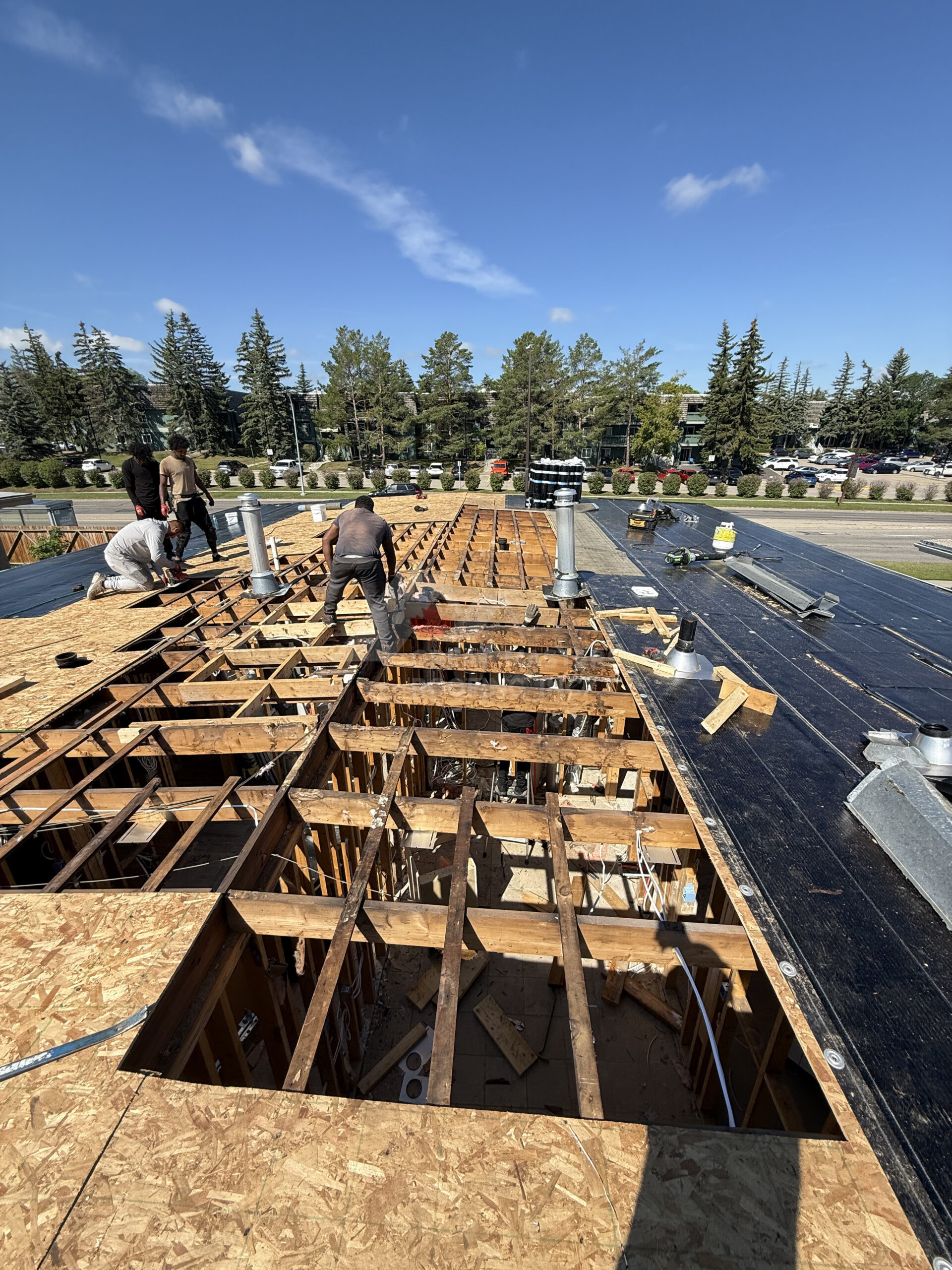
Flat Roof Replacement
A long-lasting flat roof starts at the deck. We prepare the surface, add insulation and a vapour barrier where needed, then install a membrane that suits your building. The result is a roof that drains properly and holds up to Calgary weather.
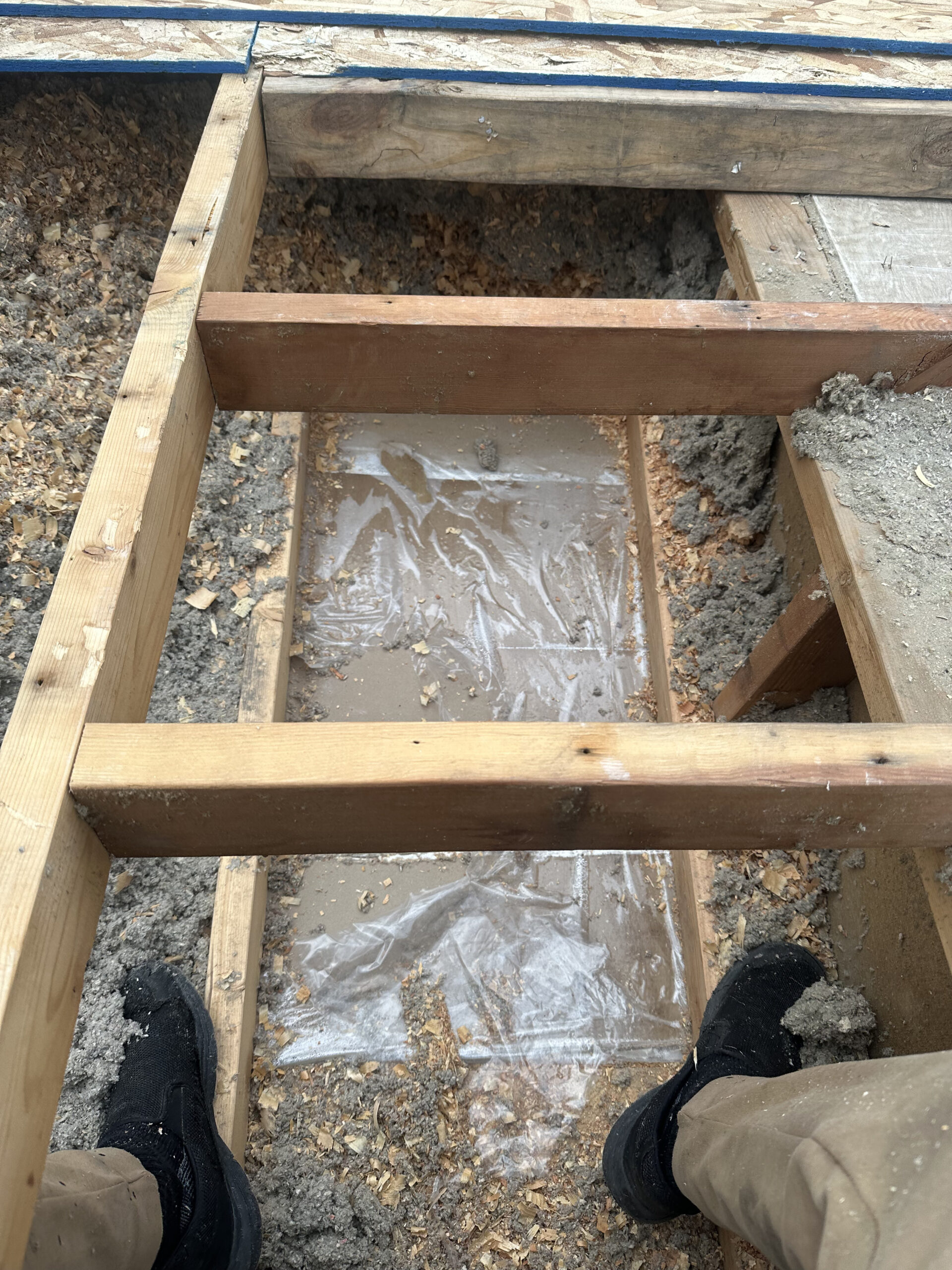
Flat Roof Repair
Water often travels before it shows up inside. We trace each leak to where it’s actually getting in, whether that’s a lifted seam, loose flashing or a puncture, then repair it with materials that match your existing system.
How A Flat Roof Works
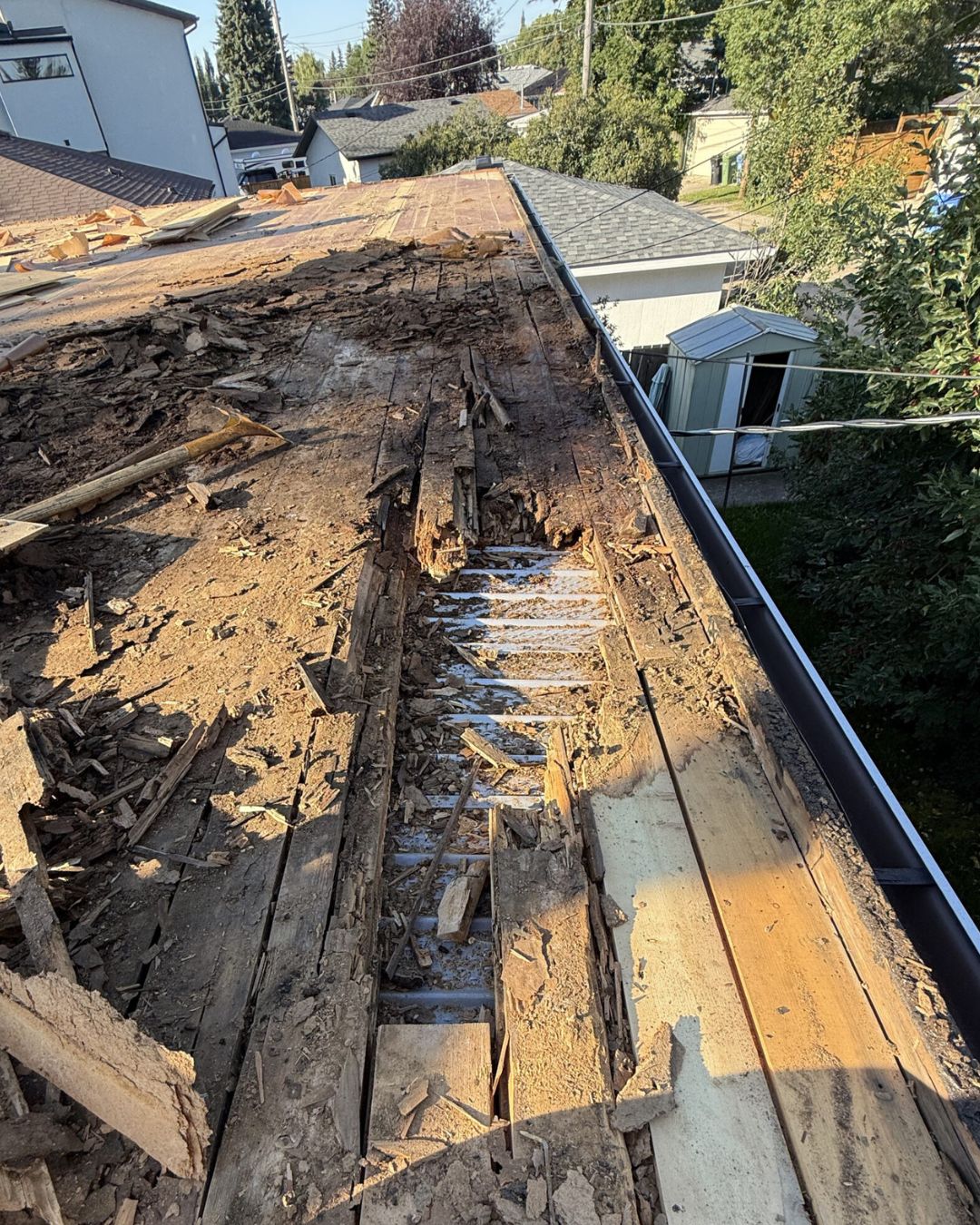
Most flat roofs aren’t perfectly flat. They have a slight slope, usually just enough to move water toward a drain, a scupper (an opening in a short wall at the roof’s edge) or an eavestrough. That gentle slope matters. Without it, water sits, and standing water is the root of most flat roof trouble.
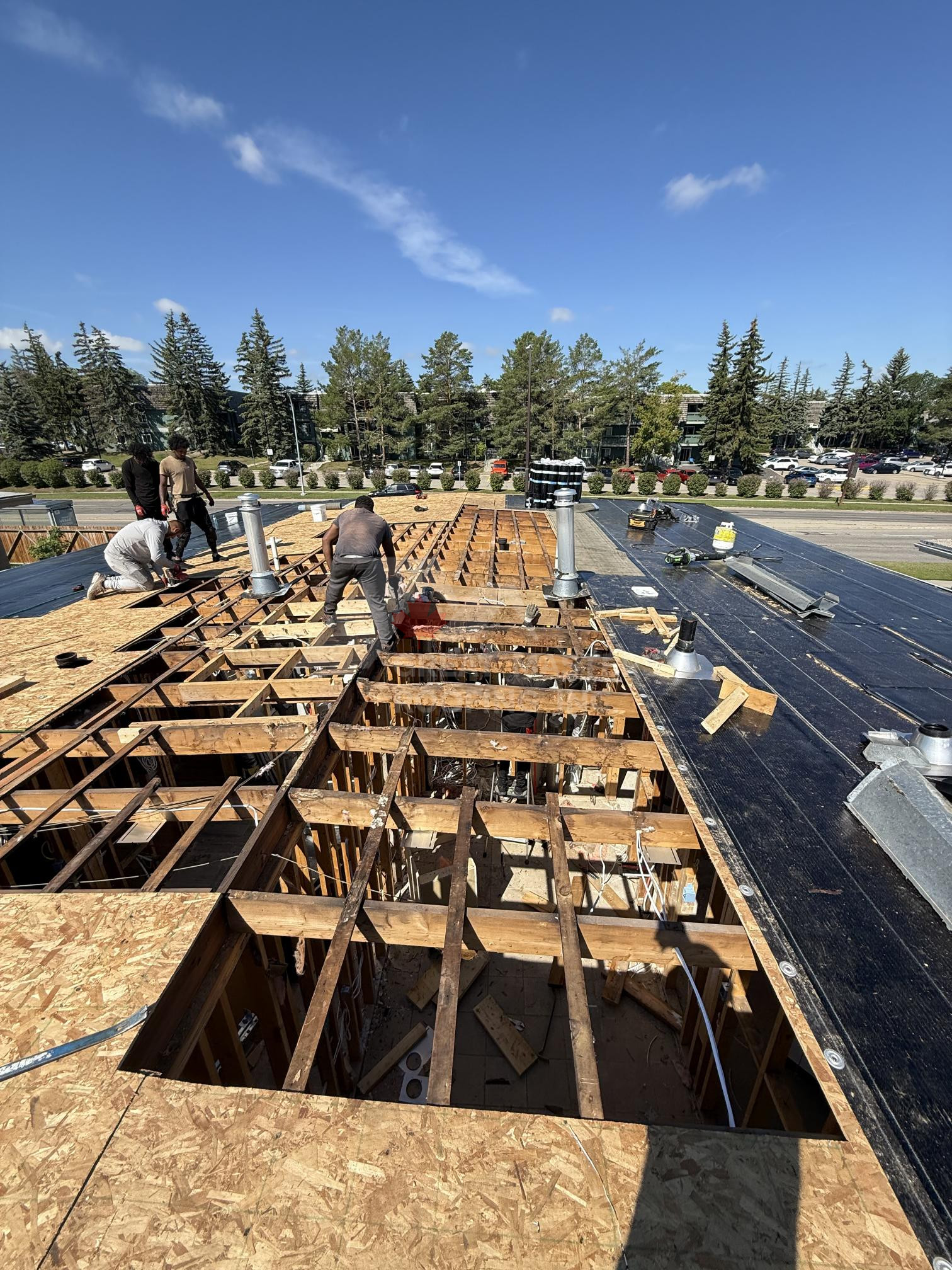
A flat roof is also a system, not a single material. When one layer fails, the others usually suffer. That’s why we look at the full build from the deck up, not just the surface.
Roof deck
The structural base, usually plywood or concrete. It has to be solid, dry and smooth before anything goes on top.
Vapour barrier
A layer that stops warm, moist air from inside your home from reaching the cold layers above, where it can condense. Not every roof needs one, but many in Calgary do.
Insulation
Keeps heat in during winter and out during summer. It also protects the layers above from extreme temperature swings.
Membrane
The waterproof layer you actually see. This is where EPDM, SBS, TPO and PVC come in.
Flashing
Strips of material that seal the edges and anything that pokes through the roof, like walls, vents, chimneys and skylights. Flashing is where many leaks start.
Drainage
The drains, scuppers and eavestroughs that carry water off the roof.
Flat Roofing Systems
There’s no single best flat roof system that fits every installation. The right system depends on your building, how the roof is used and how it drains. Here are the three we recommend most, and what to know about each. Not sure which system suits your property? We’ll walk you through the options during your estimate and recommend what fits your roof and budget.
EPDM Rubber Roofing
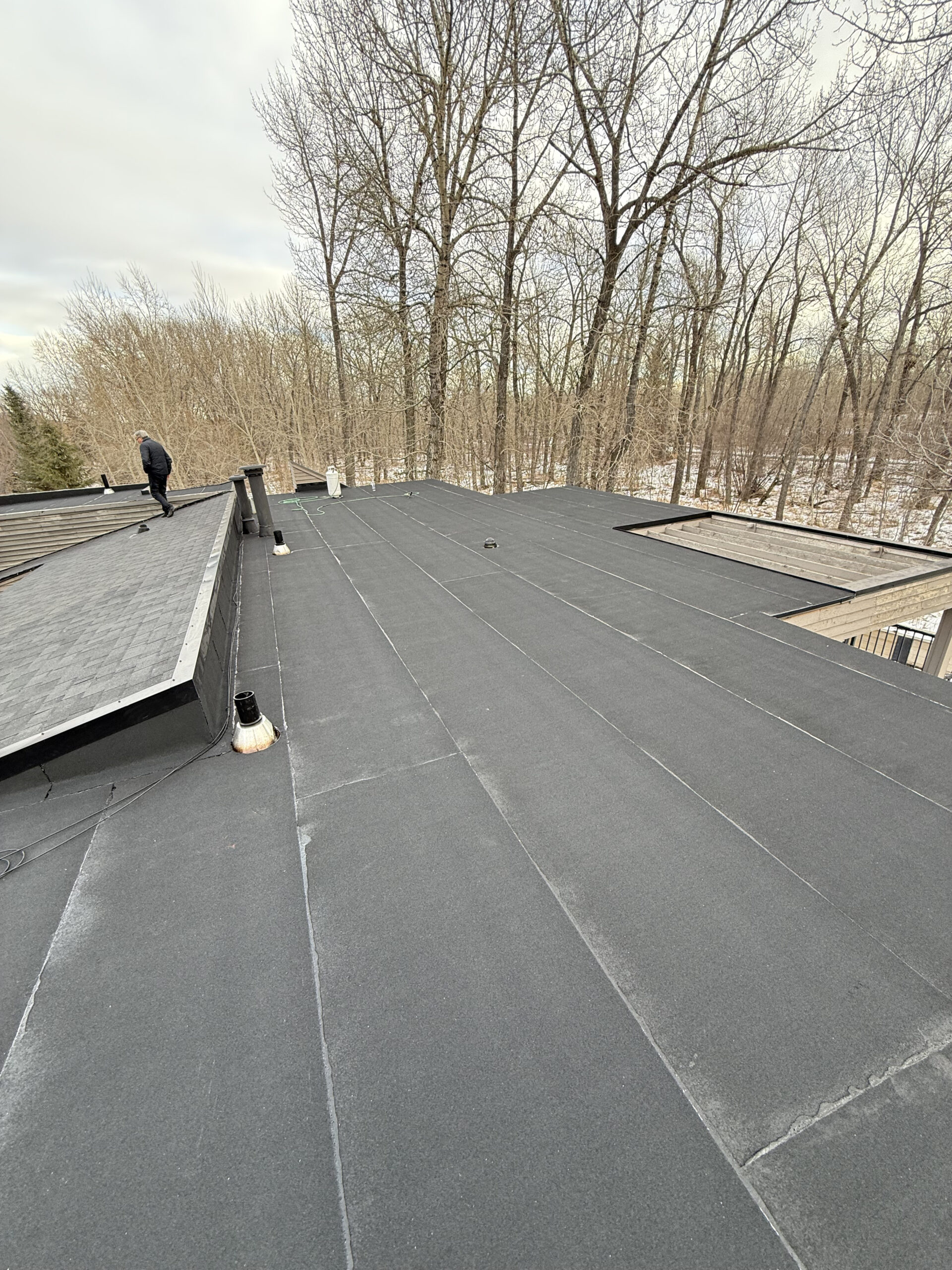
A synthetic rubber membrane laid in large sheets with few seams. It stays flexible through Calgary’s freeze-thaw cycles and chinook temperature swings, which makes it a reliable pick for garage tops, additions and smaller residential roofs. Fewer seams means fewer places for water to find a way in.
Because rubber roofs are dark, they absorb heat, which can be an advantage in a cold climate.
SBS Modified Bitumen
SBS modified bitumen is a layered system of reinforced, asphalt-based sheets finished with a durable cap sheet (the tough top layer). It can be torch-applied, where heat bonds the layers, or cold-applied with adhesives, depending on your building and the conditions. The layered build stands up well to foot traffic and hail.
Because it has multiple layers, it offers built-in backup.
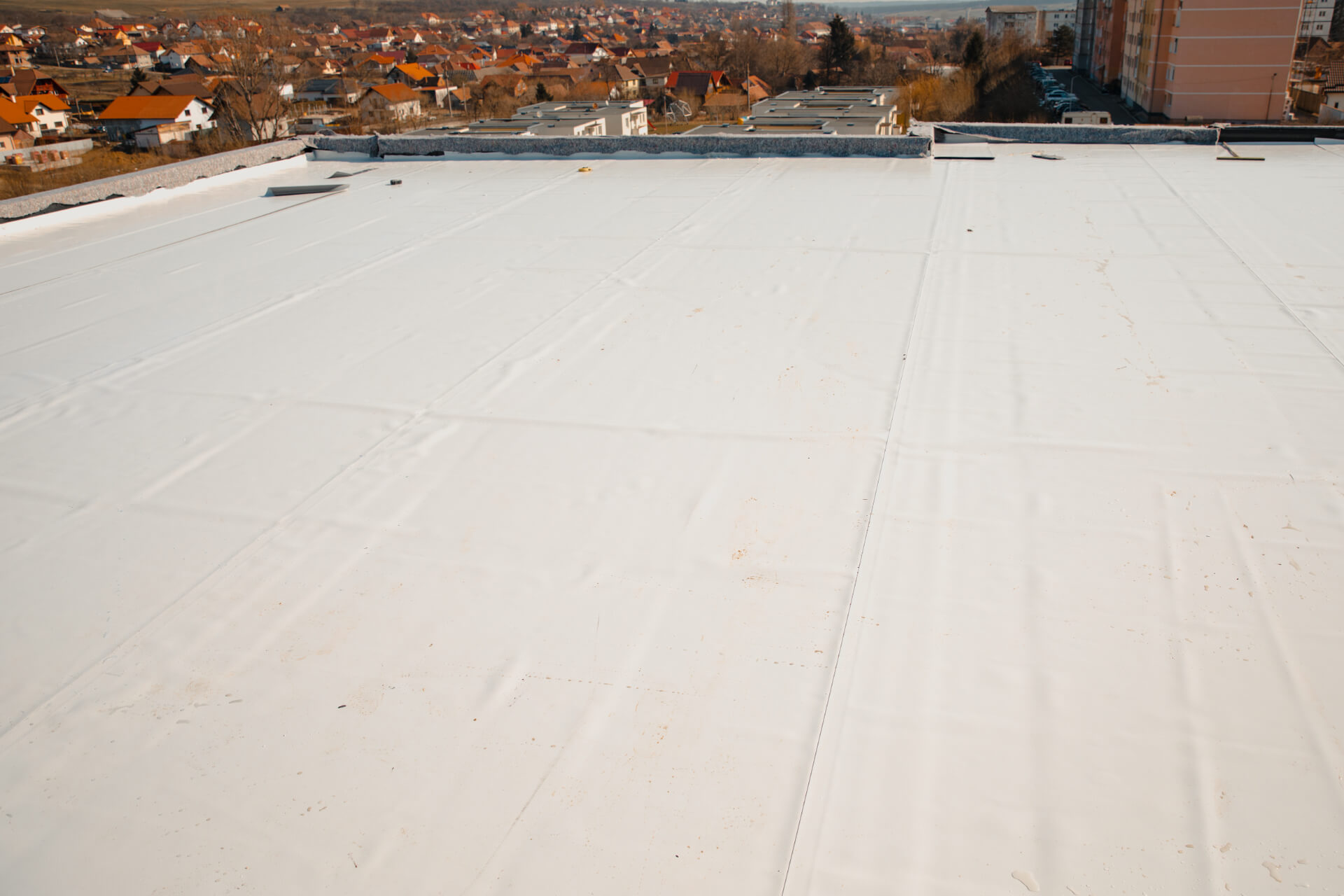
TPO And PVC Membranes
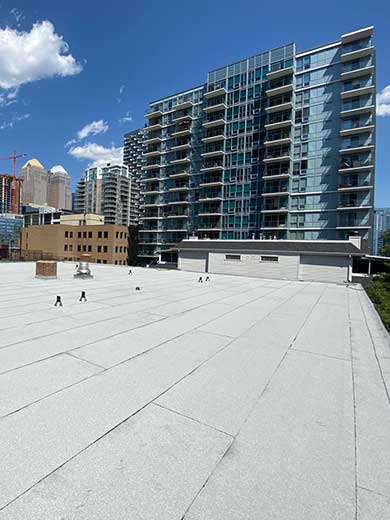
TPO and PVC membranes are single-ply membranes with heat-welded seams. Welding fuses the seams into one continuous surface, which makes them watertight. The light-coloured surface reflects sunlight and helps keep the space below cooler in summer, making them a common choice for commercial and larger low-slope roofs.
PVC also resists grease and chemicals, which helps on buildings with restaurant exhaust or similar exposure.
Request A Free Estimate Today
Flat Roof Repair
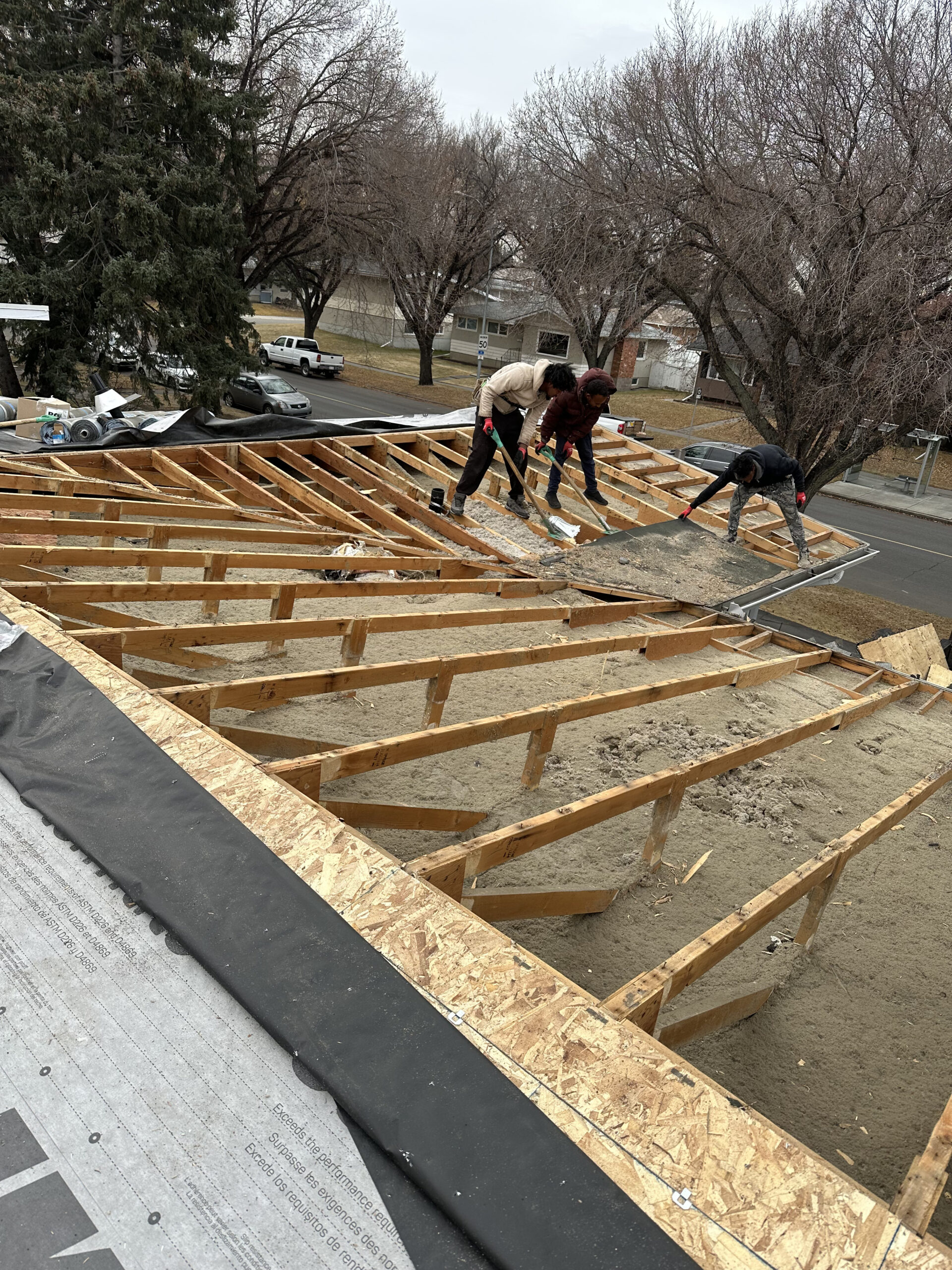
Most flat roof problems start small. A seam lifts, flashing pulls away from a wall or water sits in a low spot after a storm. Caught early, these are usually straightforward fixes. We start by finding the true source of the leak, tracing it back to where water is getting in rather than just where it shows up inside. Then we repair it with materials compatible with your existing system so the fix bonds and lasts. Once the work is done, you get a clear explanation of the problem, what we fixed and anything worth keeping an eye on.
Repair Or Replace?
A targeted repair usually makes sense when the membrane is in good shape overall, the problem is limited to one area like a seam or a section of flashing and the roof is still well within its expected lifespan. Replacement is usually the better investment when leaks keep coming back after repairs, damage is widespread, the insulation or deck underneath is wet or the roof is near the end of its life. We’ll give you a straight answer either way.
Signs Your Flat Roof Needs Attention
Water stains or drips on the ceiling below
Standing water that’s still there 48 hours after rain
Blisters, bubbles or soft spots in the roof surface
Cracked, split or lifting seams
Loose or damaged flashing around walls, vents and skylights
Debris or grit buildup around drains
Inspection & Maintenance
A twice-yearly check is the simplest way to extend the life of a flat roof. Spring inspections catch winter’s freeze-thaw damage, while fall checks clear drains and seal small gaps before snow load arrives.
A typical inspection covers seams, flashing, drains and scuppers, plus any spots where water tends to pool. Small issues found on a routine visit cost far less to fix than water damage found later on your ceiling. You can do a simple check from the ground or a window:
Look for water that hasn’t drained a couple of days after rain or snowmelt
Check that eavestroughs and downspouts are clear
Look for new stains on ceilings and walls, especially after a storm
Keep trees trimmed back so branches and leaves stay off the roof
Why Choose Real Canadian Roofing
Real Canadian Roofing is a locally based roofing team serving Calgary and surrounding communities, with hands-on experience in flat and low-slope roofing for homes and businesses. Whether it’s a small patch or a complete tear-off, we do the job right so you don’t have to call us back, and every installation and repair is backed by manufacturer and workmanship warranties.
You’ll get honest answers and clear pricing from the first visit. We show you photos of what we found on your roof, and you know exactly what each line item covers before any work starts, so the price we quote is the price you pay. On site, we protect your landscaping, keep the work area tidy and walk you through the finished work before we leave.
Flat Roofing FAQs
Not sure what your flat roof needs? Here are the questions we hear most. Don’t see yours? Give us a call.
Most flat roof membranes last 20 to 30 years. The actual lifespan depends on the material, the quality of the install and how regularly the roof is maintained.
It depends on the building. EPDM rubber suits many residential roofs, SBS modified bitumen handles cold, foot traffic and hail well and TPO or PVC is common on commercial roofs. We’ll recommend a system after seeing your roof.
The most common causes are failed seams, damaged flashing, punctures and poor drainage. Freeze-thaw cycles also wear on membranes over time. We trace the leak to its source so the repair holds.
If the membrane is in good shape overall, a targeted repair usually makes sense. Recurring leaks, widespread damage or a roof near the end of its life point toward replacement. We’ll give you a straight answer either way.
Yes. Hail can bruise, crack or puncture roofing materials, and the damage often isn’t visible from the ground. If your roof has been through a hailstorm, a professional inspection is the best way to know where it stands.
Often, yes. Cold-applied systems can go down at lower temperatures than torch-applied ones, and urgent repairs can be done year-round. We’ll let you know if conditions call for waiting.
Yes. We install, replace and repair flat roofs on commercial and multi-unit properties as well as homes.
Yes. We respond quickly to active leaks and storm damage to protect your property, then follow up with a permanent repair.
Cost depends on the roof size, the system and the scope of work. We provide free on-site estimates with detailed quotes and no hidden fees.
Calgary, Airdrie, Cochrane, Chestermere, Okotoks and surrounding communities.